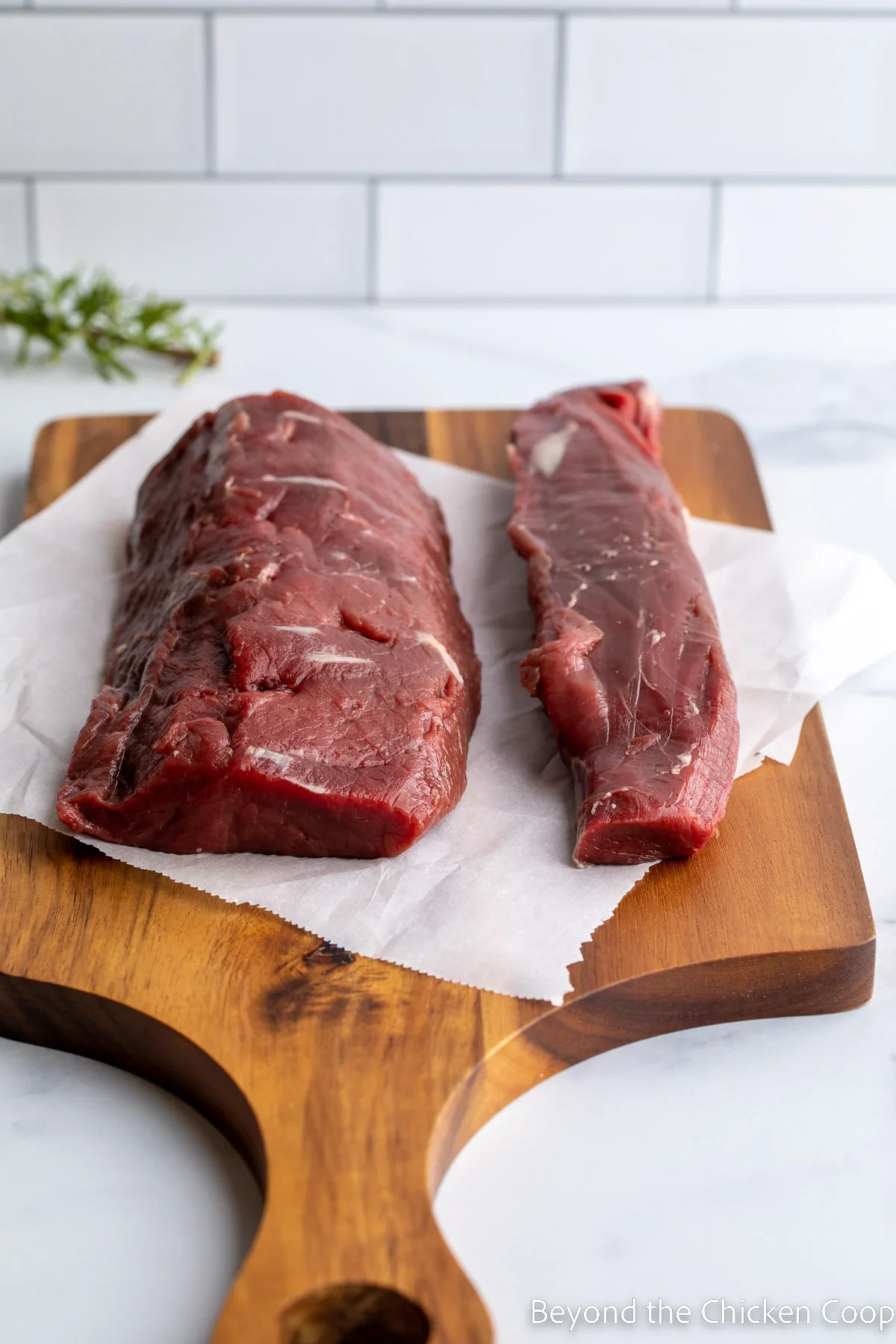
EXOTICS
Exotic meats like venison, bison, and elk offer rich flavor, high-quality nutrition, and a completely different eating experience from traditional beef and pork.
They are also one of the easiest proteins to ruin if you don’t understand how they
behave.
The biggest difference: Exotic meats are significantly leaner than beef.
That means:
- They cook faster
- They dry out faster
- They require more attention
This guide will walk you through how to cook them properly the first time—without
overcooking or losing what makes them special.
WHAT MAKES EXOTIC MEAT DIFFERENT
Most exotic meats have:
- Lower fat content
- Less marbling
Why this matters:
- Less fat = less protection during cooking
- Overcooking happens quickly
Stronger, More Natural Flavor
Often described as:
- Earthy
- Slightly sweet
- Rich
Each animal is different:
- Venison → bold, earthy
- Bison → closest to beef, slightly sweeter
- Elk → mild, clean flavor
Cooks Faster Than Traditional Meats
Because there is less fat heat penetrates faster and cooking time is typically shorter.
THE MOST IMPORTANT RULE
Do Not Overcook
This cannot be overstated.
Unlike beef, where fat helps keep it juicy, exotic meats will:
- Become dry
- Turn tough
- Lose flavor
Target Temperature
Doneness and Internal Temp
- Rare: 120–125°F
- Medium Rare: 125–135°F
- Medium: 135–140°F
Remove from heat early (5°F below target) to allow carryover cooking.
PREPARATION BASICS
STEP 1: Bring to Room Temperature
Let meat sit out for 20–30 minutes before cooking
Why: Promotes even cooking and prevents overcooking exterior.
STEP 2: Pat Dry
Remove moisture before cooking
Why: Helps develop a crust and prevents steaming
STEP 3: Season Simply
Start with salt, pepper and garlic.
Optional:
- Herbs
- Light marinades
STEP 4: Consider Adding Fat (Important)
Because these meats are lean you can:
- Cook in butter
- Wrap in bacon
- Add oil before cooking
STEP 5: Optional Marinades
Helpful for Venison and Elk
- Marinate for 2–8 hours
- Avoid over-marinating (can affect texture).
COOKING METHODS
GRILLING (BEST FOR STEAKS & BACKSTRAPS)
Setup:
- Preheat grill fully
- Use high heat
- Optional two-zone setup
Steps:
1. Place meat over direct high heat
2. Sear for 2–3 minutes per side
3. Move to indirect heat if needed
4. Remove at target temp
Key Tip:
Do not walk away—these cook quickly.
CAST IRON / PAN SEARING (BEST INDOOR METHOD)
Steps:
1. Heat pan until very hot
2. Add oil or butter
3. Place meat in pan and do not move it
4. Sear both sides
5. Add butter and aromatics (optional)
6. Baste
7. Remove at temp
Why this works: Fast cooking, Maximum control, Best crust development
OVEN (FOR ROASTS OR LARGER CUTS)
Steps:
1. Preheat oven to 250–300°F
2. Cook slowly until near target temp
3. Finish with a sear if desired
Tip:
Reverse sear works very well for exotic meats.
SMOKER (OPTIONAL)
Setup:
- 225–250°F
Key Tip:
- Use mild wood (avoid overpowering flavor)
- Do not over-smoke—these meats absorb flavor quickly
CUT-SPECIFIC GUIDANCE
VENISON
Flavor: Bold, earthy
Best Methods:
- Grill
- Pan sear
- Marinate recommended
Tips:
- Do not cook past medium
- Slice thin against the grain
BISON
Flavor: Closest to beef, slightly sweeter
Best Methods:
- Grill
- Cast iron
Tips:
- Cooks faster than beef
- Reduce cooking time compared to steak
ELK
Flavor: Mild, clean
Best Methods:
- Grill
- Pan sear
Tips:
- Great for first-time exotic buyers
- Treat similar to lean beef
RESTING (CRITICAL STEP)
- Steaks: 5–10 minutes
- Roasts: 10–15 minutes
Why: Keeps juices inside and prevents dryness
SLICING PROPERLY
Always slice against the grain
Why: Makes lean meat more tender and improves texture
FLAVOR PAIRINGS
Seasonings:
- Garlic
- Pepper
- Herbs
Sauces:
- Chimichurri
- Berry-based sauces
- Light gravy
SIDE DISH PAIRINGS
Best Pairings:
- Roasted root vegetables
- Potatoes
- Mushrooms
- Rice
Avoid: Overly heavy or greasy sides
ALCOHOL PAIRINGS
Wine:
- Cabernet Sauvignon
- Syrah
Beer:
- Dark ales
- Amber lagers
FAMILY FRIENDLY NOTES
Lower compared to beef or chicken.
Best entry points:
- Bison (most familiar flavor)
- Elk (mildest)
Less beginner-friendly:
- Venison (stronger flavor)
COMMON MISTAKES
- Overcooking
- Not using a thermometer
- Cooking like fatty beef
- Skipping rest time
- Not adding fat when needed
FINAL NOTE
Exotic meats don’t need complicated techniques—they just need attention.
Cook them quickly, don’t overdo them, and you’ll get a result that stands out from anything else on the table.
Trying exotic meat for the first time?
Our team can walk you through the best cut and exactly how to cook it before you leave the store.


