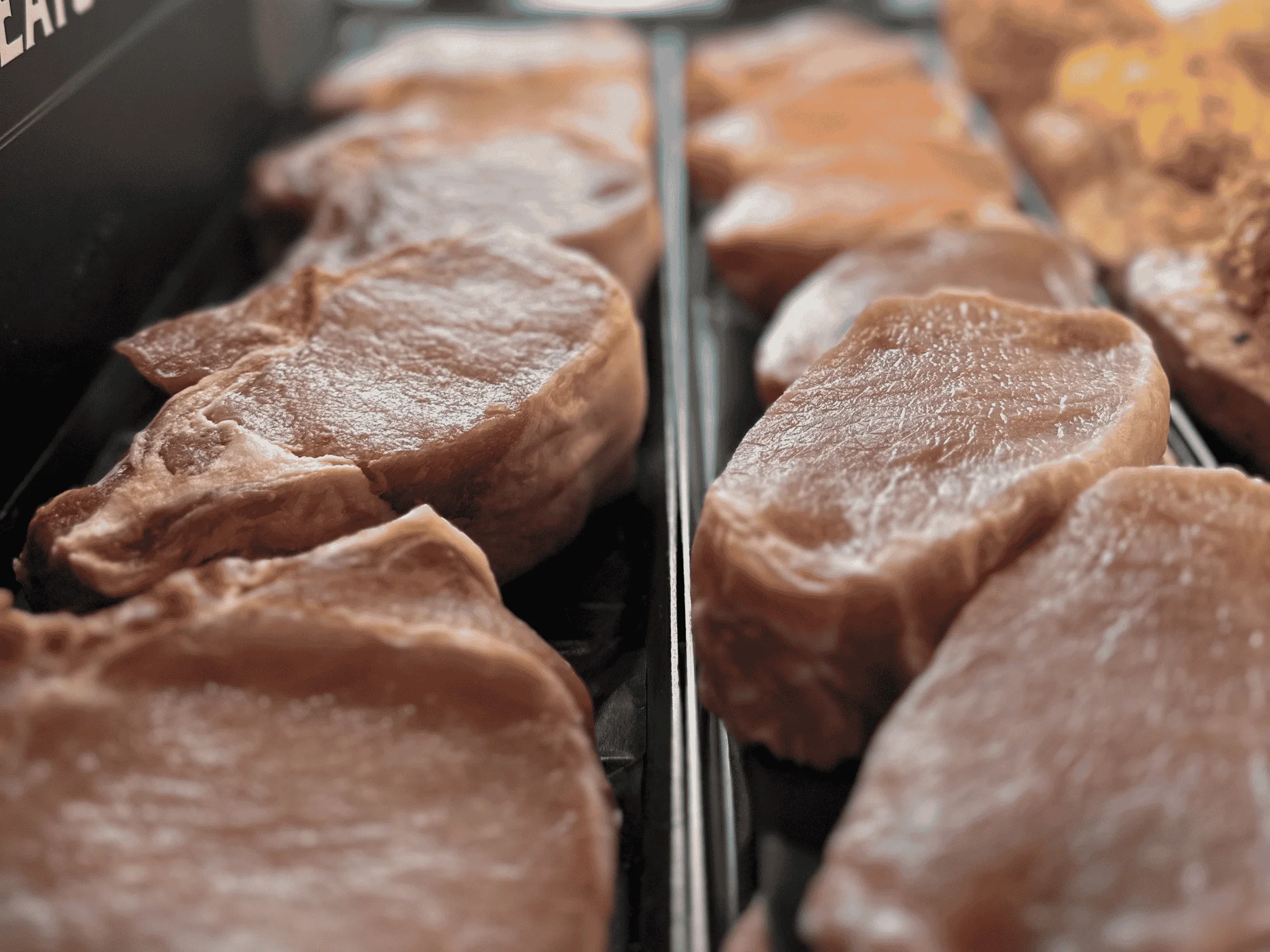
PORK
Pork is one of the most misunderstood proteins—and one of the easiest to get right once you understand a few key principles.
For years, people were taught to cook pork until it was completely done through. That habit still sticks—and it’s the reason most pork turns out dry.
Properly cooked pork should be:
- Juicy
- Tender
- Full of flavor
This guide will walk you through how to cook pork correctly the first time, no matter the cut.
UNDERSTANDING PORK CUTS
Different cuts of pork require completely different cooking methods. Knowing what you’re working with is the first step.
TENDER CUTS QUICK COOKING
Best for grilling, cast iron or quick oven roasting.
• Pork Chops (bone-in & boneless)
• Pork Tenderloin
Characteristics:
- Leaner
- Cook quickly
- Easy to overcook
FATTY / TOUGH CUTS LOW & SLOW
Best for smoking, slow roasting and braising.
- Pork Shoulder (Boston Butt)
- Pork Belly
- Spare Ribs / Baby Back Ribs
Characteristics:
- High fat and connective tissue
- Become tender over time
- Very forgiving
GROUND / PREPARED PORK
Best for skillet cooking or grilling
- Ground pork
- Sausage
SAFE TEMPERATURE (CRITICAL)
Pork is safe to eat at 145°F internal temperature + rest. This is the most important concept to understand.
What happens if you overcook pork?
• It dries out quickly
• Becomes tough
• Loses flavor
What to do instead:
• Remove pork from heat at 140°F
• Let it rest → temperature rises to 145°F
PREPARATION BASICS
STEP 1: Bring to Room Temperature
Let pork sit out for 20–30 minutes before cooking.
Helps cook evenly and prevents overcooking outside.
STEP 2: Pat Dry
Remove excess moisture with paper towels.
Helps develop crust and prevents steaming.
STEP 3: Season Properly
Pork handles seasoning well.
Start with salt and pepper (Optional: Garlic, Paprika, brown sugar blends)
STEP 4: Optional Marinades
Marinate for 2–12 hours.
Especially useful for:
- Tenderloin
- Chops
COOKING METHODS
GRILLING (CHOPS & TENDERLOIN)
Setup:
- Preheat grill fully
- Create two heat zones
Steps:
- Sear over high heat (2–3 minutes per side)
- Move to indirect heat
- Close lid and finish cooking
- Remove at 140°F
- Rest to 145°F
Watch for flare-ups (especially with fatty cuts).
CAST IRON / STOVETOP
Steps:
- Heat pan until hot
- Add oil
- Sear pork without moving it
- Flip once
- Add butter, garlic, herbs
- Baste
- Finish in oven if needed
OVEN ROASTING (TENDERLOIN & ROASTS)
Steps:
- Preheat oven to 350°F
- Place pork on rack or baking sheet
- Cook until internal temp reaches 140°F
- Remove and rest
Estimated Times:
- Tenderloin: 20–30 minutes
- Larger roasts: vary by size
SMOKER (SHOULDER, RIBS)
Setup:
- 225–275°F
Steps:
- Season generously
- Place in smoker
- Cook until tender (not just temp)
Key Concept:
You’re cooking until it pulls apart easily, not just until it hits a number.
CUT-SPECIFIC INSTRUCTIONS
PORK CHOPS
Best Methods: Grill or cast iron
Instructions:
- Cook over medium-high heat
- Do not overcook
- Remove at 140°F → rest
Notes:
Bone-in chops retain moisture better.
PORK TENDERLOIN
Best Method: Oven or grill
Instructions:
- Sear first (optional but recommended)
- Roast at 350°F
- Remove at 140°F
- Rest before slicing
Notes:
Slice into medallions after resting.
PORK SHOULDER
Best Method: Smoker
Instructions:
- Cook low and slow
- Expect several hours
- Cook until fork tender
Notes:
Your goal is a pull-apart texture (pulled pork).
PORK BELLY
Best Method: Oven or smoker
Instructions:
- Cook low and slow
- Expect several hours
- Cook until fork tender
Notes:
Render fat slowly for crisp exterior .
RESTING (CRITICAL STEP)
After cooking, let meat rest:
- Chops/tenderloin: 5–10 minutes
- Roasts: 15–20 minutes
Why: Keeps juices inside and improves tenderness.
SPECIAL NOTE
All-natural pork may have a slight odor when first opened. This is normal.
What to do:
- Open package
- Let sit 2–3 minutes
- Rinse lightly with cool water
- Pat dry
SIDE DISH PAIRINGS
Classic Pairings:
- Roasted potatoes
- Apples or apple slaw
- Green beans
Heavier Meals:
- Mac and cheese
- Cornbread
ALCOHOL PAIRINGS
Beer:
- Lager
- Amber ale
Spirits:
- Bourbon
FAMILY FRIENDLY CHOICES
- Pork chops
- Pulled pork
- Sausage
COMMON MISTAKES
- Overcooking
- Not using a thermometer
- Cooking cold meat
- Skipping rest time
Pork is one of the easiest proteins to master once you stop overcooking it.
Focus on temperature, give it time to rest, and you’ll get consistent results every time.


